Lucky Motor Corporation (LMC) has suspended fresh bookings for the Peugeot 2008 SUV in Pakistan, raising concerns about the vehicle’s future, spare parts availability, and resale value. However, the company has clarified that production has not been discontinued and deliveries against existing orders are continuing.
According to a Dawn report published on November 15, 2026, LMC Chief Executive Muhammad Faisal confirmed that the company is currently not accepting new orders but continues to assemble vehicles for customers who booked earlier.
Peugeot 2008 Production Continues, Says LMC
Introduced in 2022, the Peugeot 2008 became Pakistan’s first locally assembled European SUV, entering a market dominated by Japanese, Korean and increasingly Chinese manufacturers.
According to LMC, more than 6,000 Peugeot vehicles have been assembled at its Port Bin Qasim facility since early 2022.
While some dealers and industry sources have suggested that production has stopped, the company maintains that only fresh bookings have been suspended.
The suspension comes as rising fuel costs and growing demand for hybrid and electric vehicles put pressure on conventional petrol-powered SUVs.
Peugeot 2008 Prices Reduced by Up to Rs 1.3 Million
Despite substantial price reductions announced in June 2026, the Peugeot 2008 faces an uncertain market outlook.
The manufacturer’s website lists the following starting prices:
Variant
Previous Price
Listed Price
Peugeot 2008 Active
Rs 6,999,000
Rs 5,799,000
Peugeot 2008 Allure
Rs 7,799,000
Rs 6,499,000
The Active received a Rs 1.2 million reduction, while the Allure became Rs 1.3 million cheaper. These listed prices are subject to applicable terms and conditions, and fresh bookings remain suspended.
Both variants feature a 1.2-litre turbocharged petrol engine paired with a six-speed automatic transmission.
What Happens to Existing Peugeot Owners?
Existing owners have expressed concerns about maintenance expenses, spare parts and declining resale values.
LMC’s CEO has assured customers that Peugeot spare parts remain in stock and that Kia service centres can provide after-sales support.
However, some owners have reported high running costs. One owner quoted by Dawn claimed fuel economy of approximately 8–8.5 km/L, although actual consumption varies with driving conditions.
The significant reduction in new-car prices has also created uncertainty for used Peugeot 2008 valuations.
Key Takeaways for car buyers
Fresh Peugeot 2008 bookings have been suspended in Pakistan.
LMC says production and existing-order deliveries continue.
Listed prices have fallen by up to Rs 1.3 million.
Kia service centres can provide Peugeot after-sales support, according to LMC.
No official booking-resumption date has been announced.
Should Pakistani Buyers Consider the Peugeot 2008?
The booking suspension does not necessarily mean the Peugeot 2008 has been permanently discontinued.
However, potential buyers should confirm vehicle availability, warranty coverage, spare parts pricing and authorised maintenance arrangements before making any payment.
Buyers considering a used Peugeot 2008 should also evaluate its inspection history, fuel consumption and prevailing resale prices.
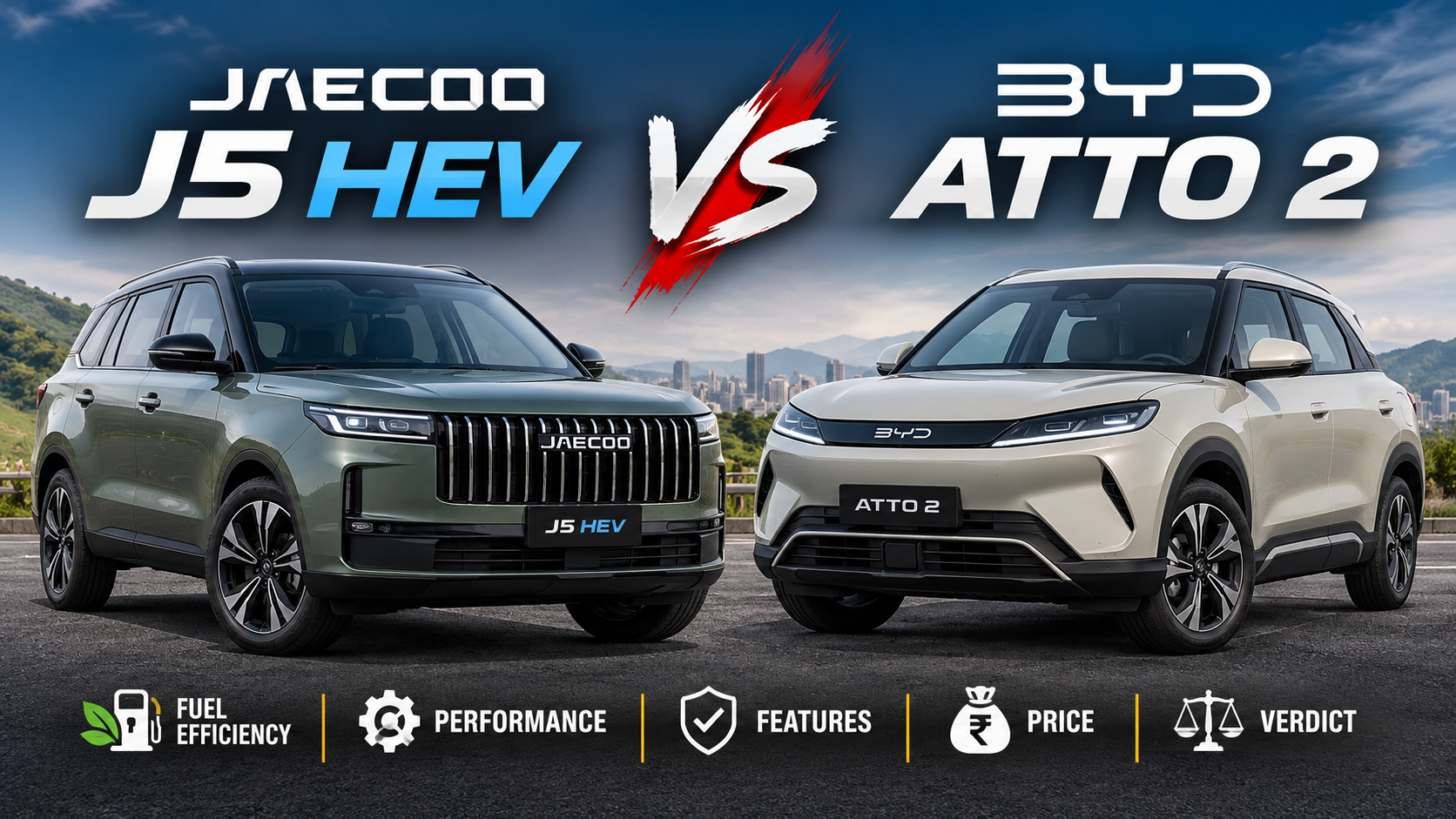
So we are back with another comparison blog and this time we are comparing Jaecoo J5 SHS-H against the BYD Atto 2. The first point you might be raising is why we are comparing a hybrid electric vehicle with a full electric when there already is a battery electric version of the Jaecoo priced at the highly competitive price of 6 million PKR. Well there are a couple of reasons.
Number one is that both are from Chinese manufacturers. Secondly, we are also going to see how a hybrid competes with a full electric in different driving conditions and scenarios.
I have previously mentioned in a few of my blogs that considering the high as well as ever fluctuating fuel prices in Pakistan it only makes sense if you start considering electric vehicles. The electric vehicle especially makes sense when you have a solar system installed in your household.
The idea is that you are basically running your vehicle free of cost and by cost I mean the cost of fuel the cost of maintenance cost of lubricants to name a few as well as the fact that taxes on electric vehicles are usually less than the vehicles with internal combustion engines like your regular Toyota Corolla or Honda civic or any midsize crossover SUV like Sportage etc.
It is a fact that Chinese car manufacturers are leading the way when it comes to electric vehicles. And it is also a fact that their prices are highly competitive compared to Japanese or European automakers. The Pakistani automotive market has swiftly moved past the hegemony of your big three that is Toyota Honda and Suzuki. If you look at the roads you will start to notice far more Chinese vehicles than what it was a few years ago.
As I mentioned above, one of the reasons is they’re highly competitive prices and second reason is the type of technology that is being offered in that price tag is unbeatable by the automakers from other countries. You get top of the line safety and security measures in your vehicles as well as top of the line and industry leading battery technology.
So let’s cut to the chase and start our review and as always we will begin with the price comparison of both vehicles.
Price
The BYD auto is available in just one variant whereas Jaco J5 is available in two variants, comfort and premium. Here are the prices of all three.
Model/
Variant
Price in PKR
BYD Atto 2
Premium
PKR 7,290,000 (Rs 72.90 Lacs)
Jaecoo J5
Comfort
PKR 6,699,000 (Rs 66.99 Lacs)
Premium
PKR 7,699,000 (Rs 76.99 Lacs)
As you can see, BYD sits right in between the comfort and premium variants of Jaecoo J5. As I have mentioned before, one is a hybrid vehicle that would be Jaco J5 whereas the other is a full electric vehicle that is BYD.
The Jaecoo J5 comes with a 1.5 litre turbocharged engine which is kind of a norm for almost every Chinese vehicle that is being launched in Pakistan right now. The engine is mated to an electric motor which is powered by a battery. On the other hand, the BYD is keeping it simple by offering a full electric vehicle and no internal combustion engine.
BYD is being marketed and sold by the Mega Motor Company whereas the Jaecoo along with Omoda is a product of Nishat Group.
It is worth noting that the cheaper Jaecoo J5 comfort variant which is priced at around 67 lakh has been priced to go head-to-head with the market leader Corolla 1.6 variant.
But on the other hand, since the BYD Atto 2 is a fully electric vehicle, it enjoys significant tax breaks in registration from different excise and taxation departments throughout the country.
Chinese car makers are pretty generous when it comes to warranties. Both Mega Motor Company and Nishat Group are offering identical warranty coverage, and for any new carmaker, it makes sense to do so to build buyer trust.
Six years or 150,000 km (whichever comes first) on the vehicle, and eight years or 160,000 km on the car’s battery pack. However, BYD goes one step further by throwing in a dedicated six year or 150,000 km warranty on its low-voltage LFP auxiliary battery as well; a neat touch if you have ever dealt with the headache and cost of replacing 12V batteries in modern electronics-heavy cars.
Powertrain
As I have said before, the Jaecoo J5 comes with an internal combustion engine (ICE) since it is a hybrid electric vehicle, a series-parallel to be exact, but the BYD Atto 2 is a fully electric vehicle. So it is not possible to do a straight up head to head comparison of both powertrains because both operate on a very different framework/architenture.
But still Here are some of the variables that are common between the two vehicles and can be judged on their respective merits.
Technology / Performance Metric
BYD ATTO 2
Jaecoo J5 SHS-H (HEV)
Propulsion Architecture
100% Pure Battery Electric Vehicle (BEV) on e-Platform 3.0
Super Hybrid System (SHS-H) Series-Parallel Hybrid (1.5L Turbo + Electric Motor)
950+ km comprehensive range (51L fuel tank; 5.3 L/100km WLTP)
Charging / Refueling & V2L
DC Fast Charge (30%-80% in 30 mins) + Vehicle-to-Load (V2L) mobile power bank function
Self-charging via petrol engine & regen (No plug-in charging; no V2L)
Thermal Management
Standard Energy-Saving Heat-Pump System (scavenges waste heat from cabin, powertrain & battery)
Engine hood insulation & liquid cooling
Warranty Coverage
6 Yrs / 150,000 km Vehicle; 8 Yrs / 160,000 km Blade Battery; 6 Yrs / 150,000 km Low-Voltage LFP
6 Yrs / 150,000 km Vehicle; 8 Yrs / 160,000 km Hybrid Battery
BYD and its Super Fancy Batteries
When it comes to the battery powered electric web curls it must be said that arguably the BYD is leading the charge in the world. There was a time when Elon Musk made fun of BYD for making electric vehicles to compete with his Tesla but things have changed drastically in this last decade or so.
BYD built the Atto 2 on its brand new e-Platform 3.0 which was made from scratch and is specifically engineered for their all electric vehicles simply put it is not a regular chassis that used to have an internal combustion engine but in fact is a dedicated chassis built to house batteries and electric motors.
The star of the show is BYD’s famous 45.12 kWh LFP (Lithium Iron Phosphate) Blade Battery. Unlike traditional lithium-ion batteries that can catch fire if punctured, BYD’s Blade Battery passed the infamous nail penetration test without emitting smoke or fire. This miracle battery even survived a severe crush test where a truck weighing over 45 tons drove over it. The Blade Battery is also pretty good when it comes to managing heat. That means the chemistry of lithium iron phosphate can handle Pakistani summer heat much better than NMC batteries. On top of that, it can endure more than 3,000 charging cycles. To put it simply it can arguably do over half a million kilometers of real-world driving before noticeable degradation.
BYD uses what they call Cell to Body technology. It is a pretty smart way of mounting batteries in the car’s chassis. Basically the battery pack is just not bolted underneath the car seats like it is usually in other vehicles and acts like a deadweight but instead the batteries are integrated directly into the structure of the car as a load bearing sandwich component, increasing the vehicle’s torsional stiffness by 32%.
Under the hood sits BYD’s 8-in-1 electric powertrain, which packs the VCU (Vehicle Control Unit), BMS (Battery Management System), MCU (Motor Control Unit), PDU (Power Distribution Unit), DC-DC controller, onboard charger, drive motor, and transmission into one compact module. The Atto 2 with its magic battery and powerful motor makes 174 hp and produces 290 Nm of instant torque and sends them straight to the front wheels. This will launch the ATTO 2 from 0 to 100 km/h in 7.9 seconds.
To protect range during extreme weather, BYD also includes an energy-saving heat-pump system as standard. It scavenges residual heat from the powertrain, battery, and cabin rather than draining the main battery with a power-hungry resistive heater. And as a massive bonus for Pakistani households, the ATTO 2 comes with Vehicle-to-Load or V2L feature. You can basically plug your vehicle into your house’s electrical wiring system and use the car’s massive battery back as your personal power backup; do your laundry, run a smoothie maker, and press your shirt with the iron during power outages which are pretty common in Pakistan unfortunately.
Jaecoo J5 SHS-H: Say no to Range Anxiety
I have said it in my previous blogs that the battery technologies are still in their infancy. They still have a long way to go. Toyota was the first to realize that with the introduction of their hybrid vehicle; the famous Toyota Prius. Even though companies like tesla and BYD along with some others are pushing extremely hard for all electric vehicles, it’s a fact that range anxiety is a real problem. And to counter that and to give their customers some peace of mind, some companies are still offering hybrid vehicles; that is, a vehicle that comes with the reliability of an internal combustion engine along with the fuel economy perks of electric motors and batteries.
Jaecoo J5 is the same!
You get a 1.5 liter turbocharged engine that has been mated to a DHT (dedicated hybrid battery) and a 1.83 kw battery to run the single motor setup.
This gives you the fuel economy of an electric vehicle albeit to some extent, as well as the peace of mind of having the reliability of a petrol-powered engine. The reason this is important is that you will know that you won’t get stranded on your journey. If the battery runs out you can just use the engine to get to the destination.
Talking about the power figures of the Jaecoo J5, the internal combustion engine makes around 140 horsepower whereas when combined with the electric motor, the horsepower bumps to 221bhp. And the torque jumps from 215 Nm on just the ICE to 295 Nm combined.
Needless to say that the j5 is a pretty peppy car. The power figures make it quite a nice little fun car to ride within the town where you need all the torque you can get.
And when you compare the power figures with the Atto 2 you will find out that this makes the J5 noticeably more powerful on paper than what Atto 2 makes, which is 174 bhp.
However the 0 to 100 km/h sprint of both vehicles is identical at 7.9 seconds.
Where the Jaecoo J5 completely changes the game is driving range. With a 51-liter fuel tank and a WLTP combined fuel consumption figure of 5.3 liters per 100 km (roughly 18.8 km/l), Jaecoo claims a comprehensive driving range of 950+ kilometers on a single tank. Even in real-world Pakistani city traffic, getting 15 to 17 km/l out of a 221-horsepower crossover is pretty cool if we are being honest. And when you decide to drive from Islamabad to Lahore or Karachi to Hyderabad, you just need to make a few minutes filling stop at your any local PSO or Total pumps and you are good to go.
NEDC vs. WLTP
One thing you need to watch out for when reading about car specifications in Pakistan is how automakers measure range.
BYD quotes 380 km on the NEDC cycle, whereas Jaecoo quotes its consumption on the WLTP cycle.
As we have discussed in the last blog where we compared the Haval H6 GT and the Omoda 7, NEDC (New European Driving Cycle) is an older, much more lenient lab test that always gives optimistic numbers.
On the other hand the WLTP (Worldwide Harmonised Light Vehicle Test Procedure) is far closer to real-world driving.
Apply a realistic 15% to 18% conservative discount to BYD’s 380 km NEDC figure, and you are looking at roughly 310 to 325 km of real-world driving range with the AC running in Pakistani weather. For daily intra-city commuting, that easily lasts a full week on a single home charge costing roughly Rs 2,200 to Rs 2,800 (or virtually free if you have solar net-metering at home). For frequent highway travelers, however, the Jaecoo J5’s 950+ km hybrid range is undeniably more convenient.
At the end, I must add that the SHS-H name at the end of J5 is kind of a marketing gimmick by Jaecoo and it is basically just like any other hybrid electric vehicle with some tweaks and changes of course so that they can call it by a trademark name legally, which is expected to be honest.
Exterior and Dimensions
Here is the snapshot of the measurement of both vehicles.
BYD ATTO 2
Jaecoo J5 SHS-H
Overall Length
4,310 mm
4,380 mm
Overall Width
1,830 mm
1,860 mm
Overall Height
1,675 mm
1,650 mm
Wheelbase
2,620 mm
2,620 mm
Ground Clearance
165mm
176 mm
Standard Boot Capacity
380 Litres
480 Litres
Expanded Boot Capacity (Seats Folded)
1,320 Litres
1,180 Litres
Wheel & Rim Size
17-inch Alloy Wheels (visual/standard)
18-inch Alloy Wheels
As you can see, the J5 is longer and wider than the Atto 2 but the Atto 2 is a little taller. The Jaecoo J5 is 70 mm longer (4,380 mm vs. 4,310 mm) and 30 mm wider (1,860 mm vs. 1,830 mm), giving it broader shoulder room and a bigger boot. On the other hand the wheelbase of both vehicles is exactly the same at 2,620 millimeters.
As the road clearance of both vehicles is concerned, J5 stands at 176 millimeters compared to Atto’s 165 mm. To give you a perspective with regards to local vehicles, the Corolla 1.6, Yaris, and Haval H6 have road clearance of 175mm. Road clearance of Peugeot 2008, Wagon R, Suzuki Fronx is 170mm. So you give you a sufficient idea of where both of these vehicles stand when it comes to their road clearance.
Being an electric car the Atto 2 has more luggage space than the conventional setup of our vehicle with an internal conversion engine. The 100-liter advantage that you will immediately appreciate when your children’s strollers or doing a monthly groceries run.
Since the Atto 2 was made from scratch to be an all electric vehicle, its chassis is designed specifically to fit the batteries and the electric motors. This makes it possible for the engineers to not only make the interiors spacious as well as make it have more luggage space. There is no conventional exhaust tunnel running in the middle of the cabin like it usually is in cars with engines. Add extra 25mm of headroom and both of these factors make the interior extra roomy and airy for the occupants.
If you talk about the overall appearance and the design language of both of these cars they both follow completely different schools of thought. The BYD ATTO 2 follows BYD’s “Dragon Face” design language penned by Wolfgang Egger. If you don’t know who that is, he is a German car designer who formerly was a head designer for the European luxury car brands Alfa Romeo, Audi and Lamborghini. Nowadays he is heading the design department at BYD Auto.
The design features sharp LED headlights, short overhangs, rounded muscular curves, and a full-width “Mobius Ring” LED taillight bar at the back. The car looks pretty modern and contemporary when you look at its design
By contrast, the Jaecoo J5 goes for a boxy, Range Rover-inspired upright SUV aesthetic with a bold vertical-slat “Waterfall” grille, sharp cliff-like shoulder lines, 18-inch alloy wheels, and a full-width “Crystal Array” LED taillight bar. Sitting side by side, the Jaecoo J5 definitely looks like the larger, more authoritative SUV.
Whether a car looks good or bad is completely subjective. Some might find the sleek design of Atto 2 more desirable and appealing than theJaecoo. On the other hand some would prefer the muscular and bulky and macho look of Jaecoo than the Atto 2.
Chassis and Suspension Setup
Both the Jaecoo J5 and Atto 2 employ McPherson strut suspension setup in the front. But when it comes to the rear side of the vehicle the Jaecoo has multi-link independent suspension but the Atto 2 uses torsion beam.
Jaecoo having an independent multi-link setup in the rear is a genuine engineering advantage in this segment. The car will absorb broken patches of road and expansion joints far more gracefully while keeping the rear planted through fast highway sweepers. While a torsion beam isn’t as sophisticated over rough mid-corner bumps as a multi-link setup, it is pretty study and can take the beating of bad roads and terrain much better than the former.
Interior and Creature Comfort
This is where the whole game is played in Pakistan. Chinese automakers have completely spoiled Pakistani buyers by packing features into Rs 70–75 lac crossovers that you wouldn’t find in a Rs 1.5 crore Japanese SUV just a couple of years ago.
Let’s look at everything both vehicles offer inside the cabin—and let’s also separate the genuinely useful daily luxuries from the fun party tricks.
I think it is pretty fair to say that both vehicles come with far more features than you would get in any other Japanese or European car in the similar price bracket. Chinese have always been the one to offer you maximum bang for your buck. Similar is the case with these two vehicles.
You get ventilated in both seats, which is pretty cool if you have to travel in the blistering hot summers of Lahore, Multan, Karachi, etc. Other than that you also get 50 watt wireless fast charging in both of these vehicles. BYD also has a built-in cooling vent for your wireless charger so that your phone doesn’t turn into a hotplate during the hot summer runs running the Android Auto which is available in both vehicles along with the Apple Carplay.
Things that are specifically are J5 Premium exclusive are:
massive panoramic glass sunroof
power-operated hands-free tailgate
heated side mirrors
second-row AC vents
larger 13.2-inch vertical touchscreen
Now let’s look at what BYD has to offer. At top of the list you get a motorised rotating 12.8 inch screen. It is a pretty cool party trick if we are being honest, but I doubt it’ll serve any purpose in your daily routine. To counter byd’s shenanigans, J5 offers you a karaoke mode in its entertainment system. You will need to buy wireless microphones for that which are optional but you get things like vocal, mixing and reverb effects. Is something like this necessary? Not really. Is it cool? maybe?!
Unfortunately, you do not get any of these bells and whistles in the cheaper J5 Comfort version. No panoramic sunroof, no ventilated seats. No power seats which are fabric. You also don’t get any wireless charger. There is no power tailgate and the screen shrinks to measly 8 inches. Against the J5 Comfort, the Atto 2 feels like a world apart.
Safety Features and ADAS
Safety of the passenger is also one of the areas where Chinese automakers have been at the forefront offering almost every safety feature in highly competitive prices.
Similar is the case here with both of these vehicles. Let’s have a look in detail.
Feature
BYD ATTO 2
Jaecoo J5 SHS-H(Comfort vs. Premium)
Airbag Protection
Standard multi-airbag protection
6 Airbags on Premium (Dual Front, Front Side, Side Curtain) / Dual Front on Comfort
The table above gives you a complete picture of every safety and driver aid feature available in these cars. Both of these vehicles along with the both variants of J5 has to offer its potential buyer.
Jaecoo J5 Premium takes the lead against the Atto 2. On top of a standard 360° surround view, you also get a 540° HD Panoramic Camera that adds a “transparent chassis” view underneath the car. A feature like this can be incredibly helpful when dodging potholes, open manholes, or tight concrete curbs in typically tight Pakistani bazaars. It also packs a full rear-radar safety net including Door Opening Warning (DOW) which warns passengers before they swing a door open into an oncoming motorcyclist, and Rear Cross Traffic Braking (RCB), plus Hill Descent Control (HDC) and Intelligent High Beam Control.
On the other hand, the BYD ATTO 2 takes the lead with its passive structural safety and intelligent curve control. Having a Cell-to-Body Blade Battery that increases body rigidity by 32% and refuses to undergo thermal runaway even when pierced by a nail gives the BYD unmatched crash-structure integrity. On the software side, BYD includes Traffic Sign Recognition (TSR) and Speed Adjustment on Curve (SAOC), which automatically slows the car down smoothly when Adaptive Cruise Control detects the traffic slowing down in the front or a sharp bend ahead.
Unfortunately when it comes to the Comfort variant of Jaecoo J5 you get zero ADAS features, no blind-spot monitoring, and only 2 airbags. The headlights are also your run of mill halogen. You are paying nearly 67 lacs for a car in 2026 and you are only getting halogen headlights and just 2-airbags. Sounds kinda cheap when you can add like 6 more lacs and get a full ADAS suit available standard in the Atto 2.
Segment-by-Segment Winners and Losers
To make your buying decision relatively easier, here is the final scorecard across every major category:
Price & Value for Money:Winner – BYD ATTO 2 (Rs 72.90 Lacs)
While the Jaecoo J5 Comfort is cheaper at Rs 66.99 lacs, it is heavily stripped down. Against the properly equipped Jaecoo J5 Premium (Rs 76.99 lacs), the BYD saves you Rs 4 lacs upfront. On top of that you will also get significantly lower EV registration/token taxes. Add ventilated leatherette seats, wireless charging, and full ADAS as standard to the mix and you got yourself a winner.
Powertrain, Range & Long-Distance Usability:Winner – Jaecoo J5 SHS-H
With 221 hp, 295 Nm, ~18.8 km/l fuel economy, and 950+ km of total driving range, the Jaecoo J5 eliminates charging anxiety completely. The BYD ATTO 2’s 380 km NEDC (~315 km real-world) range is brilliant for city driving, and its V2L power bank feature is awesome, but intercity highway trips in Pakistan still require careful charger planning.
Being 70 mm longer and 30 mm wider with 176 mm of ground clearance and a 480-liter boot (100 liters bigger than the BYD’s 380L trunk) makes the J5 better suited for family luggage and rough Pakistani roads, even if the BYD wins on max folded cargo space (1,320L).
Adding a panoramic glass sunroof, hands-free power tailgate, heated exterior mirrors, ambient lighting, rear AC vents, and karaoke mode gives the J5 Premium a noticeably more upscale cabin ambiance. (Loser: Jaecoo J5 Comfort).
Safety & Driver Assistance:Winner – Tie (Jaecoo J5 Premium for Active ADAS / BYD ATTO 2 for Structural & Battery Safety)
Jaecoo J5 Premium wins on cameras (540° view) and motorcycle-saving Door Opening Warning, while BYD ATTO 2 wins on crash-structure rigidity (CTB Blade Battery), Traffic Sign Recognition, and curve speed control.
Verdict: Which One Should You Buy?
Both vehicles have their pros and cons. And honestly, the fact that Pakistani buyers can now choose between a global-spec fully equipped EV and a 221 bhp turbo hybrid in the budget of 70 to 77 lac bracket shows just how far the Chinese automotive wave has pushed our market forward.
Buy the BYD ATTO 2 (Rs 72.90 Lacs) if 90% of your driving is within the city whether its Islamabad, Lahore, Karachi, or any other metropolitan. EVs make especially sense if you have a home solar setup. Makes the car running practically free.
You get near-zero running costs, whisper-quiet EV refinement, industry-leading safety features, ventilated seats, V2L power backup, and a complete ADAS suite. All of this for 4 lacs less than the top-spec Jaecoo.
Buy the Jaecoo J5 SHS-H Premium (Rs 76.99 Lacs) if you frequently travel between cities on the motorways or GT road and don’t want the hassle of finding a charger station. If you need luggage space and want a bigger boot, a masculine and bolder-looking SUV with a panoramic sunroof, powered tailgate, and a 540° camera, J5 Premium is the one for you. If you are buying the Jaecoo J5, the Premium trim is the only one that truly delivers the modern Chinese crossover experience. Just skip the base Comfort variant unless your budget is strictly capped under 68 lacs.
This is pretty much up for this one. Hope you have enjoyed today’s blog.
If you are looking for a pre-inspected car, head over to carmandi.pk and bid on your favourite car. For all the news, reviews and fun stuff, follow us on our carmandi social media. Until next time, happy motoring.
Suzuki Motor Corporation is set to launch its first fully electric passenger kei car, the Suzuki e SKY, in Japan on November 16, 2026. The compact electric vehicle promises a driving range of 310 kilometres per charge and has already secured more than 4,000 orders ahead of its official market debut.
According to Suzuki’s November 2026 financial presentation, the e SKY received 4,036 orders by November 9, approximately one month after bookings opened, indicating strong early demand for the Japanese automaker’s new electric offering.
Suzuki e SKY Offers 310 KM Range and 26 kWh Battery
The Suzuki e SKY is powered by a 26 kWh lithium iron phosphate (LFP) battery, delivering a claimed driving range of 310 kilometres under Japan’s WLTC testing cycle.
The electric mini-car features Suzuki’s newly developed eAxle technology, integrating the electric motor, inverter and reduction gears into a compact unit.
It also uses the dedicated HEARTECT-e electric vehicle platform, designed to improve energy efficiency, reduce vehicle weight and maximise interior space.
Suzuki claims an electricity consumption rate of just 97 Wh/km, positioning the e SKY among the most energy-efficient electric kei cars in Japan.
With a minimum turning radius of 4.4 metres, the vehicle is designed for city commuting, congested roads and limited parking spaces.
Suzuki e SKY Price and Variants
Suzuki will offer the e SKY in three variants in Japan, with prices starting at 2.12 million yen.
Variant
Price in Japan
e SKY A
¥2,120,000
e SKY G
¥2,390,000
e SKY X
¥2,790,000
The entry-level A variant will be manufactured on a made-to-order basis.
Depending on the variant, the e SKY offers a 10.1-inch infotainment display, connected navigation, regenerative braking and advanced driver-assistance features.
Suzuki has set a monthly sales target of 1,000 units for the new electric model.
Could Suzuki e SKY Launch in Pakistan?
The introduction of the e SKY is particularly interesting for Pakistan, where compact Suzuki vehicles have traditionally attracted buyers seeking affordable transportation and lower running costs.
With petrol prices remaining a major consideration for motorists, smaller electric vehicles could offer an alternative for daily urban commuting.
However, Pak Suzuki has not announced any plans to introduce the e SKY in Pakistan.
Any potential local launch would depend on factors including pricing, import duties, localisation feasibility and charging infrastructure.
The e SKY’s Japanese pricing should not be treated as an indication of its potential Pakistani market price.
Key Highlights and Industry Outlook
Launch date: November 16, 2026, in Japan.
Driving range: 310 km (WLTC).
Battery: 26 kWh LFP.
Starting price: 2.12 million Japanese yen.
Advance orders: 4,036 by November 9.
Pakistan availability: No official announcement.
Suzuki’s entry into the electric kei-car segment could encourage further development of compact, efficiency-focused EVs. For Pakistan, the bigger question remains whether affordable electric city cars can eventually become a practical alternative to conventional petrol-powered hatchbacks.
Pakistan’s proposed Auto Policy 2026–31 could make electric vehicles more affordable through lower taxes, increased bank financing and incentives for charging infrastructure. Announced by the federal government on November 7, 2026, the policy aims to accelerate EV adoption, strengthen local manufacturing and reduce dependence on imported fuel.
The proposals could benefit Pakistani car buyers, although their impact on showroom prices will depend on final government approval and implementation.
Proposed EV Tax Cuts Could Lower Car Prices
One of the policy’s biggest highlights is a revised sales tax structure designed to encourage electric mobility.
The proposed sales tax rates are:
Battery Electric Vehicles (BEVs): 1%
Range-Extended Electric Vehicles (REEVs): 6%
Plug-in Hybrid Electric Vehicles (PHEVs): 9%
The government has also proposed exemptions from Capital Value Tax (CVT), Withholding Tax (WHT) and Federal Excise Duty (FED) for qualifying electric vehicles priced up to $50,000.
These incentives could lower the purchase cost of eligible EVs, particularly as more manufacturers introduce locally assembled electric models.
EV Financing Limit to Increase to Rs10 Million
The policy proposes raising the electric vehicle financing limit from Rs3 million to Rs10 million, alongside extending the repayment period from three to five years.
This could make EV ownership more accessible to buyers who cannot afford the full purchase price upfront.
However, monthly instalments will still depend on bank financing rates, down payments and eligibility requirements.
Charging Infrastructure Gets New Incentives
Pakistan’s limited public charging network remains a major obstacle to widespread EV adoption.
To address this, the government has proposed reducing sales tax on charging equipment to 1% and eliminating customs duty on eligible charging equipment.
Financial support for charging stations is also planned, potentially encouraging private investment and improving charging availability across major cities and highways.
IMF Raises No Objection to New Policy
In a significant development, reports published on November 12 confirmed that the International Monetary Fund (IMF) had raised no objection to the proposed automotive policy framework.
The government is now expected to seek federal cabinet approval before introducing the necessary legislation in Parliament.
Until these steps are completed, the proposed tax concessions should not be considered fully implemented.
Will Electric Cars Become Cheaper in Pakistan?
The proposed incentives could reduce EV ownership costs and encourage competition among existing manufacturers and new electric vehicle brands.
However, exchange-rate fluctuations, imported battery costs, local production expenses and charging availability will continue to influence affordability.
Key Highlights
Fully electric vehicles could benefit from 1% sales tax.
EV financing could increase to Rs10 million over five years.
Qualifying EVs under $50,000 could receive additional tax exemptions.
Charging infrastructure could benefit from reduced duties.
Final implementation remains subject to regulatory and legislative approval.
Pakistan’s Auto Policy 2026–31 offers a promising direction for electric mobility, but buyers will need to see actual price reductions before its affordability benefits become clear.
Pakistan’s passenger car market recorded a significant recovery in October 2026, with sales up 60% from the same month last year. The Suzuki Alto led the market, selling more than 11,000 units and highlighting continued demand for smaller, relatively affordable vehicles.
According to the latest data released by the Pakistan Automotive Manufacturers Association (PAMA), passenger car sales reached 21,635 units in October 2026, compared with 13,513 units in October 2025. Month on month, sales almost doubled, rising 98% from 10,939 units recorded in September.
Suzuki Alto Leads October Sales
The Suzuki Alto emerged as Pakistan’s best-selling passenger car, recording sales of 11,363 units during October. This was a 130% increase from 4,931 units sold in the same month last year. Its strong performance also made it the biggest contributor to the month’s overall sales growth.
The Suzuki Swift followed with 3,214 units sold, showing a 175% year-on-year increase compared with 1,170 units in October 2025. Meanwhile, Suzuki Cultus recorded sales of 653 units, up 26% from the previous year.
However, not all manufacturers experienced similar growth. Toyota’s Corolla, Yaris and Corolla Cross recorded combined sales of 3,496 units, down 7% year-on-year. Honda’s Civic and City also faced a decline, with combined sales falling 14% to 1,933 units.
These figures show that while the market is recovering, individual manufacturers are experiencing different levels of demand.
Small Cars Continue to Drive Demand
Cars with engine capacities below 1,000cc continued to dominate consumer demand. This category recorded 11,885 units in October 2026, representing a 118% increase compared with the same period last year. These vehicles accounted for nearly 55% of total passenger car sales which reflects the continued consumer interest in compact cars. Lower purchase and maintenance cost make small cars a suitable option for buyers managing household expenses.
Passenger Car Sales rise in FY2027
The positive trend was also visible in the first four months of FY2027. Between July and October 2026, passenger car sales reached 63,507 units, compared with 42,831 units during the corresponding period last year, marking a 48% increase.
However, the recovery was not equally strong across all segments. Jeep and pickup sales declined by 27% year-on-year in October, indicating weaker demand in this category.
What Should Car Buyers Know?
The latest figures suggest improving demand in Pakistan’s automotive market, with Suzuki models attracting significant consumer interest. However, rising sales do not necessarily mean that vehicle prices have become more affordable.
For potential buyers, the latest figures provide a useful indication of which models are attracting the most demand. The Suzuki Alto’s strong performance also highlights the importance of economical and compact vehicles in Pakistan’s automobile market.
Key market Highlights:
Passenger car sales increased 60% year-on-year .
Suzuki Alto remained the market leader with 11,363 units sold.
Suzuki Swift recorded 175% annual sales growth.
Toyota and Honda recorded declines in their combined passenger car sales.
Cars below 1,000cc accounted for nearly 55% of passenger car sales.
Cumulative passenger car sales increased 48% during July–October FY2027.
With the government’s Auto Policy 2026–31 still awaiting further clarity, buyers will be watching upcoming policy decisions and market developments to understand how they could affect vehicle prices and purchasing decisions.
The Pakistani car market is changing rapidly. This is the kind of a sentence that you have been hearing since automotive blogs have been in existence in Pakistan. You read any 10-year-old blog on any website and you will read something like this. How is the industry changing? How the new cars are coming but the truth is it took a lot of effort and has not always been the case. In reality it has only been for the last 5 or 6 years that the things have started to change.
And I believe it is fair to say that China is leading the charge here with all sorts of cars, manufacturers, models, variants and vehicles. Hence today’s blog.
In this blog, we will be discussing two major and premium hybrid vehicles offered by Chinese automakers, the Haval H6 GT PHEV versus the Omoda 7 SHS-P. Both vehicles are premium mid-size coupe-SUVs and come with advanced plug-in hybrid (PHEV) drivetrain making both of them ideal contenders for this comparison.
Before we start, let’s make it clear that the SHS-P is Omoda’s branding name for the plugin hybrid technology with some minor tweaks.
We all know the fuel prices in Pakistan change daily and are highly unpredictable. And on top of that, considering the load of traffic on our inadequate infrastructure, it has become kind of a habit for daily commuters to wait for hours stuck in traffic just to reach their destination. In conditions like these, the electric vehicles make more sense than the petrol vehicles. But it is also the reality that the battery powered vehicles are still in the early stage of development at this time at least. And it is going to take at least a few more decades for them to compete with something as reliable as an internal combustion engine.
So, considering that it is quite obvious and sensible to go for a vehicle that not only offers the reliability of an internal combustion engine that runs on fossil fuel and combines that reliability with battery power to reduce the day-to-day running cost of the vehicle. But if you think about that a little indepth, you will find that with the type of electric vehicles that are in the market, one can argue that PHEV vehicles are more desirable because of their internal combustion engines and the backup of their long range batteries.
Price
Like always, let’s start with the prices of both vehicles first. Then we will continue with their specs as long as all the bells and whistles that they offer.
Vehicle Model
Price (PKR)
Haval H6 GT PHEV
12,949,000 (1.3 crore)
Omodo 7 SHS-P
10,649,000 (1 crore 7 lakh)
As you can see, the Haval is around 23 lac pricier than the Omoda. The Haval is being offered by Sazgar Engineering, whereas the Omoda is sold by Nishat Group.
Both come with the 1.5-liter turbo petrol engine and both have electric motors powered by batteries. Omoda 7 comes with a 6 year or 150,000 km (whichever comes first) vehicle warranty and 8 years or 160,000 km (whichever comes first) battery warranty. Similarly Haval H6 GT comes with a 6 year or 150,000 km (whichever comes first) vehicle warranty and 8 years or 160,000 km (whichever comes first) battery warranty. But it also offers a 10 years or 1,000,000 km (whichever comes first) warranty for its engine which is pretty cool if we are being honest.
Engine and Powertrian:
Let’s get straight to the heart of both vehicles and what powers them. As I have said above both come with a 1.5-litre internal combustion engine that is powered by a turbocharger.
Engine
Powertrain
Combined Output
0-100 km/h
EV Range
1.5L Turbo Petrol
Dual-Motor Intelligent AWD (Hi4)
430 hp / 642 Nm
4.58 s
183 km
1.5L Turbo Petrol
Single-Motor FWD (SHS)
341 hp / 525 Nm
8.5 s
90 km
As for the battery powered motors, the H6 GT PHEV comes with a dual motor intelligent all-wheel drive system which they call Hi4. On the other hand, Omoda 7 comes with a single motor front wheel drive electric motor system. Being an AWD H6 GT can either send all its power to the rear wheels, or just front wheels, or like any other AWD vehicle, it can do a 50:50 power split between the front and the rear wheels. Unlike older mechanical AWD that was available in vehicles like older Kia Sportage and Hyundai Tucson, the H6 GT’s AWD system is completely digital with electric motors intelligently turning on and off the traction between the front and the rear wheels. All of this is done in milliseconds without any noticeable lag.
The combined horsepower of Haval H6 GT is 430 bhp and 642 newton metres of torque. It does 0 to 100 in 4.58 seconds, which is pretty impressive for a vehicle of this size and weight (over 2 tons).
The combined horsepower of Omoda 7 is 341 bhp and makes around 525 N.m of torque. Omoda does 0 to 100 in 8.5 seconds which is almost double the time it takes Haval H6 GT to reach the same speeds.
The H6 GT comes with a 4-Speed Dedicated Hybrid Transmission (DHT) whereas the Omoda 7 has a Single-Speed Continuous Variable DHT (Dedicated Hybrid Transmission). Where Omoda’s seamless single-speed transmission provides smooth acceleration, at lower speeds, the GT’s transmission sends power of the engine directly to the wheels making it an acceleration beast compared to Omoda.
Talking about the EV range of both vehicles. The Omoda does 90+ (WLTP) kilometers in full EV mode whereas the H6 GT does 180+ (NEDC) kilometres in full EV mode. On the other hand, the total range of both Omoda 7 and Haval H6 GT is 1250 (WLTP) kilometers and almost 1200 (NEDC) kilometres respectively.
One thing that you might have noticed is that one vehicle measures its range in WLTP, whereas the other measures in NEDC. WLTP stands for Worldwide Harmonised Light Vehicles Test Procedure whereas NEDC stands for New European Driving Cycle.
Universally WLTP is recognised as a better and more thorough and rigorous testing system compared to the European driving cycle. NEDC is kind of a softer and lenient testing method of electric vehicles and presents an optimistic range of vehicles compared to the Worldwide Harmonised Light Vehicles Test Procedure. So if we want to convert one into the other, there is a conservative conversion factor of 18% that is applied to the original claimed NEDC range. In this case, 183 km multiplied by 0.82 equals to almost 150 km which is the estimated WLTP range of Haval H6 GT.
Since we are talking about the range of the EV mode of both vehicles, let’s discuss the battery capacity as well. H6 GT has a 35.43 kWh Lithium Iron Phosphate (LFP) battery, whereas the Omoda 7 comes with a smaller 18.4 kWh Lithium Iron Phosphate (LFP) battery.
With a 48 KW DC charging system, you can charge your Haval H6 GT PHEV from 30% to 80% within half an hour. And with the 6.6 KW AC charging system you can do 0% to 100% in 6 hours for the H6 GT PHEV. Omoda 7 can do 30% to 80% in roughly 20 minutes. By the way, both vehicles offer Vehicle-to-Load (V2L) which means you can plug your household electrical appliance into the vehicle’s battery system via the car’s charge port. This is a pretty useful feature if you are out and about camping in the wilderness and you need to plug in your hot water, kettle or your blender for your smoothie. Jokes aside, this can be used for running emergency or spot lights, or road assistance equipment like a tire inflator etc. It is basically a giant battery power bank that can run your necessary electrical stuff.
Dimensions
Let’s start with the outlook of both vehicles. It is pretty obvious that Haval H6 GT is sort of based on the regular H6 but with a slanting roof making it sort of a fastback body style vehicle, but on the other hand, the Omoda looks drastically different with its futuristic and almost contemporary design language.
Component / Metric
Haval H6 GT PHEV
Omodo 7 SHS-P
Overall Length
4,727 mm
4,660 mm
Overall Width
1,940 mm
1,875 mm
Overall Height
1,729 mm
1,670 mm
Wheelbase
2,738 mm
2,720 mm
Ground Clearance
170 mm
200 mm
As you can see, the H6 GT is a little longer at 4,727 mm compared to the Omoda 7’s 4,660 mm. H6 GT is also wider at 1,940 mm compared to the 1,875 mm of Omoda 7. And same is the case with the height of both vehicles. The GT stands a little taller at 1,729 mm compared to Omoda’s 1670 mm. The road clearance of a motor 7 is the only area where it takes the lead over the Haval H6 GT 200mm versus 170 mm.
When we are talking about the wheelbase of both vehicles, we can see that the H6 GT has an 18 mm longer wheelbase than the Omoda. Although 18 mm doesn’t sound very significant but it must be said that even this small amount adds to the overall comfort of the vehicle in terms of how the engineers have developed the geometry of the vehicle which means how it will perform on the road in terms of handling as well as the comfort for the passengers with a larger room in the interior.
Long story short, Haval H6 GT is a larger vehicle than the Omoda 7.
Suspension and Chassis Design
Just because a vehicle is fast that does not mean it is going to perform well in regards to its handling and comfort. This is where the suspension and chassis design of a vehicle comes in.
The H6 GT is built on “LEMON platform” by the Great Wall Motors which they say has high rigidity and utilises over 71% high strength steel that makes the shell frame of the passengers. As I have said above, the GT comes with not only an internal combustion engine but two electric motors and a big battery pack as well. That means this is a hefty car. It weighs over 2 tons and you need a strong chassis and a suspension design to make sure that your vehicle doesn’t body roll into every other corner. For that reason, the H6 GT comes equipped with sporty and firm dampers to make sure the rear wheels are planted on the ground when driving into the corners or going over the humps and bumps.
Like Great Wall’s LEMON platform, Omoda has Chery’s T1X platform which is made specifically for their hybrid vehicles. Meaning it is made to occupy an internal combustion engine plus an electric motor along with the batteries. One thing to be noted here is that Omoda 7 has a lighter chassis than the H6 GT. Having a lighter chassis means it feels nimble during the slow runs or going into the twisties. Overall vehicle ride feels softer and plushier compared to the sportier feel of the Haval H6 GT’s suspension and chassis.
Both vehicles come with the McPherson strut independent suspension in the front and multilink independent suspension in the rear. You get ventilated disks in both the Haval H6 GT and the Omoda 7 helping you stop in time. The H6 GT comes with 19-in alloy wheels, whereas the Omoda comes with 20-in alloys. As I have mentioned earlier, the Omoda is lighter than the H6 GT; in terms of kilograms Omoda 7 weighs at around 1,780 kg compared to H6 GT which stands at 2050 kg.
Interior, Comfort and Safety Features
One thing about the Chinese car manufacturers is that they offer as many features in a car that they can fit in a package. Similar is the case with these two vehicles and considering both are kind of a premium segment vehicles, you can expect their respective manufacturers to have fitted their vehicles with all sorts of luxuries and amenities up to the brim.
Here is a list of all the features that are available in both vehicles:
Features
Haval H6 GT PHEV
Omodo 7 SHS-P (Premium Trim)
Infotainment Display
14.6-inch Coffee OS Touchscreen
15.6-inch 2.5K Star-Rail Glide Screen (Sliding display via 4-finger swipe)
Processor / Chipset
Standard Infotainment System
Qualcomm Snapdragon 8155 Intelligent Chipset
Audio & Speakers
9 Speakers with 8-Channel Independent Amplifier & Speed Sensitive Volume Control
12-Speaker SONY Premium Surround Sound System (with headrest speakers)
Head-Up Display (HUD)
W-HUD (Windshield Head-Up Display)
Head-Up Display (HUD) Included
Driver Seat Adjustment
8-Way Power Adjustable with Lumbar Support & Welcome/Memory Function
Power Adjustable with Electric Lumbar Support & Memory Function
Front Passenger Seat
4-Way Power Adjustable
Zero-Gravity Seat with Electric Adjustment & Thigh Support
Massage Function
Not Available
8 Therapeutic Massage Points in Front Passenger Zero-Gravity Seat
Seat Heating & Ventilation
Front Seats Heated & Ventilated
Front Seats Heated & Ventilated (Cushions & Backrests)
Upholstery & Styling
Leatherette (PVC) with GT-Embossed Red Logo & Faux-Suede Accents
Leatherette Gaming-Style Sport Seats with Contrast Stitching
Inductive Power Tailgate, Keyless Entry & Button Push Start
Electric Tailgate, Keyless Entry & Remote Engine Start via Smart Key
Interior Rearview Mirror
Electronic Internal Anti-Glare Rearview Mirror
Automatic Anti-Glare Interior Rearview Mirror
If you go through the list you will find out. There are a couple of areas where H6 GT takes the lead and then there are some areas where Omoda 7 takes the lead when it comes to providing superior features. And then there are some areas where it’s a tie between the two.
At a glance you will find out that Haval H6 GT provides better connectivity and app control as well as it has a larger 10.25-inch instrument cluster compared to Omoda.
On the other hand, Omoda 7 takes a lead in infotainment display where it has a 15.6-inch 2.5 k infotainment display system. The system is powered by a Qualcomm Snapdragon 8155 chipset. It has a better 12 speaker Sony premium surround sound system compared to the nine speaker sound system available in the Haval.
Omoda has more seat functions and adjustability as well as a massage function as well. In fact, it is an eight therapeutic massage point function in the front passenger seat and they call it a “Zero Gravity” system.
Omoda 7 also has a fragrance system for your cabin. It is a triple fragrance dispenser system. The fragrances are dark temptation, charming air and forest bath.
Omoda also comes with a 50 watt wireless fast charging system in the cabin. It has front and rear USB and type-c fast charging. It’s not like these features are not available in Haval H6 GT but either the number of features are few or maybe not comparable to the competition.
And then there are features that are available in both vehicles in sort of the same way like the heads-up display, driver seat adjustment which are full of features with lumbar support and memory functions. Similarly, same as the case with the Omoda. Then there is seat heating and ventilation. It’s available in both vehicles. Upholstery and styling is also premium in both vehicles. You get fancy upholstery and styling in both vehicles. It’s a matter of personal choice which ones do you prefer.
The climate control is top notch in both vehicles where you get all sorts of adjustment as well as CN95 air filtration in both the H6 GT and the Omoda 7.
Similarly panoramic sunroof is available in both vehicles. As for the entry into the vehicle, you get a power tailgate with keyless entry and a button push start feature in both vehicles. And then there are small features which are similar in both vehicles like the automatic anti-glare rearview mirror.
Needless to say both vehicles offer a whole bunch of luxuries and features.
And same is the case with the safety features and functions. Here is the list of all the features including ADAS available in both of these cars:
Safety & ADAS Feature
Haval H6 GT PHEV
Omodo 7 SHS-P (Premium Trim)
Airbag Count & Coverage
6 Airbags (Dual Front, Front Side, Side Curtain Airbags)
8 Airbags (Dual Front, Front Side, Side Curtain, Driver Knee, Front Row Center Airbag)
360 / Parking Camera
540 Degree View Camera with Clear Chassis View
540 HD Panoramic Camera System with Dynamic Guides
Dash Cam / Event Recorder
Event Data Recorder (EDR)
Dash Camera + Event Data Recorder (EDR)
Adaptive Cruise & Highway ADAS
Adaptive Cruise Control (ACC) + Intelligent Cruise Assistance (ICA) + Traffic Jam Assistance (TJA)
Adaptive Cruise Control (ACC) + Integrated Cruise Assist (ICA) + Traffic Congestion Assist (TDA) + Curve Speed Control (CSA)
ABS + ESP + EBD + BAS + BOS + MCB (Multi-Collision Braking) + HDC + HAC
Radar Sensors
Front Radar (Auto Turn-On) & Rear Radar
Front & Rear Radar
Headlight Assist & Lighting ADAS
Automatic High Brightness LED Matrix Headlamps + Way-Home Lighting
Adaptive Intelligent High Beam Control (IHC) + Dynamic Flowing Turn Signals + Music Rhythm Lighting
Like above you can see that there are some areas where one vehicle supersedes the other at a glass. You will find out that maybe Haval is taking the lead with all sorts of safety and driver assist features compared to the Omoda.
One of the biggest differences and a major upgrade is that the H6 GT comes with a fully autonomous reverse which can reverse the car up to 50 meters out of tight alleyways and an auto parking system which is not available in Omoda. The H6 GT also comes with traffic sign recognition system and intelligence speed limit as well as overspeed warning system. Compared to that, Omoda has automatic speed limiter with speed limit reminder.
The Omoda 7 comes with 8 airbags, one for the driver knee and for the front row centre, but the GT H6 comes with 6 airbags. Omoda also has active child detection.
H6 GT also has intelligent turning as well as “Intelligent Dodge” which is basically warning and automatic assistance for avoiding heavy traffic in case of an imminent collision along with the dynamic steering torque (DST). If you are wondering, DST is basically a feature where the vehicle kind of helps the driver in case there is a loss of traction at low speeds as well as countering side roll in case of heavy crosswinds as well as skidding. On the other hand, Omoda comes with curve speed control assist which in simple terms is a feature where the vehicle slows down in case the entry speed of the vehicle is higher for the type of road curve ahead.
Although both vehicles have all sorts of breaking and chassis stability options, for example:
ABS – Anti-lock Braking System
BAS – Brake Assist System
BOS – Brake Override System
EBD – Electronic Brakeforce Distribution
ESC – Electronic Stability Control
ESP – Electronic Stability Program
HAC – Hill-start Assist Control
HDC – Hill Descent Control
IBC – Integrated Brake Control (manufacturer-dependent)
MCB – Multi-Collision Braking
RMI – Roll Movement Intervention (Roll-over Mitigation)
SCM – Secondary Collision Mitigation
TCS – Traction Control System
But there are a couple which are only available in Haval and not Omoda like the Roll Movement Intervention and Brake Torque Control which is also known as brake traction control.
Then there are features which are available in both vehicles like the door opening warning, Blind Spot & Rear Collision Safety, radar sensors, Driver Monitoring System (DMS), and Lane Keeping Assistance (LKA), to name a few.
Needless to say, you are safe and comfortable in both vehicles.
Verdict
Well, if you have successfully reached the end of this blog, I would personally like to congratulate you. Secondly, I will keep it simple and just say this; if you want performance and maximum safety for you and your passengers, but you are willing to pay an extra amount of around 2.3 million then Haval H6 GT is the one to go for.
But if you prefer futuristic styling and a vehicle that offers maximum passenger comfort and is hellbent to make sure that you have the most comfortable and luxurious ride of your life, then the Omoda 7 is the one to go for.
Rest it is also a fact that a personal choice plays an important role when it comes to buying a vehicle. Some features are important to some people which may not be the case for a lot of other people. Going through the blog and reading all the specs and the features you might have already come to a conclusion by yourself about both vehicles. You might have already realised that Haval H6 GT is sort of a performance oriented vehicle. I mean it is even in the name. The GT stands for “grand tourer”. That whole vehicle is designed to be a luxurious sporty SUV that is focused to provide you great driving pleasure.
On the other hand, the Omoda is designed to give you a comfortable relaxing ride to take you from point a to point b where you do not have to worry about what is going on outside of your vehicle. You just sit back and relax and enjoy a comfortable “zero gravity” ride.
I hope you guys have learnt something new in this blog. And hopefully it will help to make an educated decision for your next vehicle. Until next time, stay tuned to carmandi.pk social media channels for all the latest news.
And if you are looking for a used car in the market, go check out carmandi.pk for all the pre-inspected vehicles and bid to win your next dream car.
Pakistan’s used-car imports remain active despite tighter government restrictions, with more than 2,000 vehicles reportedly arriving under the Overseas Pakistani Gift Scheme in October 2026. The development has renewed debate over vehicle imports, competition and the impact on local car manufacturers.
According to a report published by Dawn on November 10, 2026, auto vendors said more than 2,000 used vehicles entered Pakistan under the Gift Scheme during October. The continued inflow comes despite the government’s efforts to tighten import regulations and prevent the misuse of schemes originally designed for overseas Pakistanis.
Government Tightens Used-Car Import Rules
The government abolished the Personal Baggage Scheme in January 2026 through SRO 61(I)/2026. However, the Gift and Transfer of Residence schemes remain available under stricter conditions.
Under the revised rules, overseas Pakistanis must meet a minimum stay-abroad requirement of 850 days during the preceding three years. The interval between vehicle imports under the schemes has also been increased to 850 days.
Another important change is the one-year transfer restriction. Vehicles imported under the Gift or Transfer of Residence schemes cannot be transferred to another person for one year from the date of importation.
These measures are intended to discourage commercial misuse and ensure that the schemes benefit genuine overseas Pakistanis and their families.
Why Are Used-Car Imports Still Increasing?
Despite tighter personal import conditions, used vehicles continue to enter Pakistan particularly through the Gift Scheme. The scheme allows eligible overseas Pakistanis to send a used vehicle to a qualifying family member in Pakistan, subject to applicable import regulations, duties and taxes. Commercial imports provide another route for bringing second-hand vehicles into the market.
The number of vehicles imported through the scheme rose from just seven in May 2026 to 2,238 in September. A separate Dawn report published in October highlighted that 2,276 vehicles were imported under the Gift Scheme in September, according to Commerce Ministry data.
The increase has created mixed reactions across the automotive industry. Importers believe greater competition can provide buyers with more vehicle choices. Meanwhile, local parts manufacturers have raised concerns about the impact of imported vehicles on domestic production and localisation under the new auto policy announced last week.
For local assemblers such as Indus Motor, Pak Suzuki and Honda Atlas, increased competition could put pressure on pricing, product quality and customer offerings.
What Does This Mean for Car Buyers?
The continued arrival of imported used vehicles could provide Pakistani buyers with more options, particularly those interested in Japanese and other foreign-made vehicles.
Increased competition may also put pressure on sellers to offer more competitive prices. However, lower car prices are not guaranteed, as import duties, taxes, currency exchange rates, shipping costs and local market demand also influence vehicle prices.
What Should Buyers Check Before Purchasing an Imported Car?
For customers considering an imported used vehicle, checking its legal status is just as important as checking its condition.
Before making a payment, buyers should:
– Verify the vehicle’s customs clearance and import documents.
– Check its registration details and registered owner’s identity.
– Confirm that the one-year transfer restriction has expired, where applicable.
– Verify the vehicle’s chassis and engine numbers.
– Have the vehicle inspected by a trusted mechanic.
It is also important to compare the total cost of an imported vehicle with that of a locally assembled alternative rather than making a decision based only on its advertised price.
Pakistan’s used-car market continues to evolve as the government balances consumer choice with protection for local manufacturing. For car buyers, increased imports may offer more choices, but a vehicle’s legal documentation and transfer eligibility should remain top priorities.
Pakistan’s new Automotive Industry Policy 2026–31 could bring changes to vehicle prices, manufacturing costs and competition in the local auto market. Announced by the government on November 7, 2026, the policy aims to make vehicles more affordable, encourage electric vehicle (EV) adoption and make the local automotive industry more competitive.
However, the big question for Pakistani car buyers is whether these changes will lead to lower showroom prices. While prices could decrease gradually, immediate reductions are not guaranteed.
Government Plans Gradual Reduction in Vehicle Costs
Adviser to the Prime Minister on Industries and Production Haroon Akhtar Khan says the new policy will gradually reduce import duties on completely built-up (CBU) vehicles, assembly kits and automotive components over five years.The aim is to reduce manufacturers’ production costs and make the local automobile industry more competitive. This could bring down vehicle prices across most categories.
The government has also set a five-year export target of $6 billion, with greater emphasis on localisation and domestic production. These measures are intended to reduce reliance on imported vehicles and strengthen Pakistan’s auto parts industry. For consumers, greater competition could eventually mean improved vehicle features, better quality and more choices in different price ranges.
EV Buyers Could Receive Tax Benefits
Electric and plug-in hybrid vehicles are among the key focus areas of the proposed relief under the new policy.
The proposed sales tax structure includes:
– Battery Electric Vehicles (BEVs): 1%
– Range-Extended Electric Vehicles (REEVs): 6%
– Plug-in Hybrid Electric Vehicles (PHEVs): 9%
Electric vehicles priced up to $50,000 are proposed to be exempt from capital value tax, withholding tax and federal excise duty.
These preferential rates are intended to encourage consumers to consider alternative-fuel vehicles. However, buyers should wait for the relevant government notifications before assuming that these tax rates have taken effect.
How Much Could Car Buyers Save?
Industry estimates reported in October suggested that some conventional petrol and hybrid vehicles could become approximately 8–10% cheaper, while plug-in hybrid vehicles could see potential reductions of more than 20%.
For selected vehicles priced between Rs 5 million and Rs 6 million, estimated savings could reach Rs250,000 to Rs300,000, according to an automotive industry expert quoted in recent reporting.
However, these figures are estimates rather than confirmed price reductions. Actual savings will depend on the final tax structure and how manufacturers adjust their prices.
Will Petrol Car Owners pay more?
The policy is not limited to electric vehicles. Gradual reductions in import duties on automotive components could lower production costs for local assemblers, potentially benefiting conventional car buyers as well.
However, the proposed Automotive Development Levy (ADL) on conventional petrol-powered vehicles with engines above 1,000cc could offset some of these benefits. Vehicles up to 1,000cc are expected to remain exempt from this levy protecting buyers who rely on affordable vehicles.
This means the actual impact of financial relief on car buyers could vary depending on the vehicle category and the final tax structure.
What Should Car Buyers Expect?
Although the policy presents the possibility of more affordable vehicles, immediate price reductions are not guaranteed. Manufacturers will also need to pass any production-cost savings on to customers.
For people planning to purchase a new vehicle, it may be worth keeping an eye on official policy notifications and upcoming price announcements.
The draft policy has received the Prime Minister’s approval and will be considered by the federal cabinet before formal implementation.
Industry Takeaways for Car buyers
Vehicle prices could decrease gradually as import duties and production costs fall.
EV and plug-in hybrid buyers could benefit from proposed preferential tax rates.
A 20% cap on advance booking payments aims to improve consumer protection.
Local manufacturers will face greater pressure to meet localisation and export targets.
Actual showroom prices will depend on implementation and manufacturers’ pricing decisions.
For Pakistani car buyers, the new Auto Policy 2026-31 could bring positive changes to the automotive market. However, the real benefit will become clear only when the proposed measures are formally implemented and reflected in vehicle prices.
Car buyers in Pakistan may need to pay less upfront if the government approves and implements a proposed 20% advance payment cap. The Automotive Industry Development and Export Policy 2026–31 proposes to limit vehicle manufacturers from demanding more than 20% of a vehicle’s price as an advance payment at the time of booking. The proposal aims to protect customers from excessive upfront demands and improve transparency in the automotive market.
How much would buyers pay under the proposed limit?
The advance payment would depend on the vehicle price under the proposed policy. For example, a buyer who books a vehicle worth Rs 4 million would pay a maximum advance of Rs 800,000. For a vehicle priced at Rs 5 million, the proposed limit would be Rs 1 million.
This could reduce the amount customers need to arrange upfront, making vehicle booking more manageable for buyers.
Part of a wider plan for the auto industry?
The booking advance proposal is one of several measures included in the Pakistan Automotive Policy 2026–31. The policy focuses on improving vehicle affordability, increasing local manufacturing, promoting electric vehicles, strengthening safety standards, and expanding automotive exports. It also sets a target of achieving $ 6 billion in automotive exports over five years.
Prime Minister Shehbaz Sharif approved the final draft after IMF approval. The draft is now under consideration by the Federal Cabinet before proceeding through the remaining approval process and implementation.
What should car buyers do now?
For now, customers should keep in mind that the proposed 20% limit could provide financial relief once it takes effect. They should keep an eye on the latest booking terms and payment schedules issued by vehicle manufacturers before making a payment.
If approved and implemented, the proposal could help reduce the financial burden on car buyers. However, its actual impact will depend on how effectively the government implements the new policy.
Petrol in Pakistan now costs PKR 322.00 per litre and high-speed diesel costs PKR 357.00 per litre. These rates apply from 21 November 2026, as notified by OGRA.
Fuel
Price (PKR per litre)
Change
Petrol
PKR 322.00
Down PKR 1.00
High-speed diesel
PKR 357.00
Up PKR 2.00
Why fuel prices in Pakistan change so often
Since mid-2026, fuel prices in Pakistan are revised on weekdays instead of once a fortnight. OGRA works out each new rate from international oil prices, the rupee’s exchange rate against the dollar, and the petroleum levy and other taxes the government adds on top. A move in any one of these can show up at the pump the next day. The rate announced on Friday night stays in place over the weekend. When no new notification is issued, as on a public holiday, the last rate stays in force.
For most car owners, fuel is the biggest running cost after the car itself. A change of PKR 5 per litre adds or saves PKR 200 on a 40-litre tank. Over a month of daily driving in Lahore or Karachi, small daily changes add up quickly.
Petrol and diesel price history
Effective from
Petrol
Diesel
21 November 2026
PKR 322.00
PKR 357.00
20 November 2026
PKR 323.00
PKR 355.00
19 November 2026
PKR 322.00
PKR 355.00
18 November 2026
PKR 325.00
PKR 358.00
17 November 2026
PKR 328.00
PKR 358.00
14 November 2026
PKR 330.00
PKR 360.00
13 November 2026
PKR 332.00
PKR 360.00
12 November 2026
PKR 335.00
PKR 364.00
11 November 2026
PKR 338.00
PKR 371.00
7 November 2026
PKR 346.00
PKR 378.00
This page updates every weeknight once the new rates are out, and the table above keeps a record of each change. If higher fuel costs are pushing you towards an imported hybrid like the Aqua or Prius, check its auction sheet before you pay. Car Mandi verifies auction sheets for PKR 1,500.