Suzuki e SKY Electric Car to Launch on November 16 With 310 KM Range

Suzuki e Sky electric Kei car featuring a 310 km driving range, scheduled for launch in Japan on November 16, 2006

Suzuki Motor Corporation is set to launch its first fully electric passenger kei car, the Suzuki e SKY, in Japan on November 16, 2026. The compact electric vehicle promises a driving range of 310 kilometres per charge and has already secured more than 4,000 orders ahead of its official market debut.

According to Suzuki’s November 2026 financial presentation, the e SKY received 4,036 orders by November 9, approximately one month after bookings opened, indicating strong early demand for the Japanese automaker’s new electric offering.

Suzuki e SKY Offers 310 KM Range and 26 kWh Battery

The Suzuki e SKY is powered by a 26 kWh lithium iron phosphate (LFP) battery, delivering a claimed driving range of 310 kilometres under Japan’s WLTC testing cycle.

The electric mini-car features Suzuki’s newly developed eAxle technology, integrating the electric motor, inverter and reduction gears into a compact unit.

It also uses the dedicated HEARTECT-e electric vehicle platform, designed to improve energy efficiency, reduce vehicle weight and maximise interior space.

Suzuki claims an electricity consumption rate of just 97 Wh/km, positioning the e SKY among the most energy-efficient electric kei cars in Japan.

With a minimum turning radius of 4.4 metres, the vehicle is designed for city commuting, congested roads and limited parking spaces.

Suzuki e SKY Price and Variants

Suzuki will offer the e SKY in three variants in Japan, with prices starting at 2.12 million yen.

VariantPrice in Japan
e SKY A¥2,120,000
e SKY G¥2,390,000
e SKY X¥2,790,000

The entry-level A variant will be manufactured on a made-to-order basis.

Depending on the variant, the e SKY offers a 10.1-inch infotainment display, connected navigation, regenerative braking and advanced driver-assistance features.

Suzuki has set a monthly sales target of 1,000 units for the new electric model.

Could Suzuki e SKY Launch in Pakistan?

The introduction of the e SKY is particularly interesting for Pakistan, where compact Suzuki vehicles have traditionally attracted buyers seeking affordable transportation and lower running costs.

With petrol prices remaining a major consideration for motorists, smaller electric vehicles could offer an alternative for daily urban commuting.

However, Pak Suzuki has not announced any plans to introduce the e SKY in Pakistan.

Any potential local launch would depend on factors including pricing, import duties, localisation feasibility and charging infrastructure.

The e SKY’s Japanese pricing should not be treated as an indication of its potential Pakistani market price.

Key Highlights and Industry Outlook

  • Launch date: November 16, 2026, in Japan.
  • Driving range: 310 km (WLTC).
  • Battery: 26 kWh LFP.
  • Starting price: 2.12 million Japanese yen.
  • Advance orders: 4,036 by November 9.
  • Pakistan availability: No official announcement.

Suzuki’s entry into the electric kei-car segment could encourage further development of compact, efficiency-focused EVs. For Pakistan, the bigger question remains whether affordable electric city cars can eventually become a practical alternative to conventional petrol-powered hatchbacks.

Pakistan’s New Auto Policy 2026–31: 1% EV Tax and Rs10 Million Financing Could Make Electric Cars Cheaper

Pakistan’s proposed Auto Policy 2026–31 could make electric vehicles more affordable through lower taxes, increased bank financing and incentives for charging infrastructure. Announced by the federal government on November 7, 2026, the policy aims to accelerate EV adoption, strengthen local manufacturing and reduce dependence on imported fuel.

The proposals could benefit Pakistani car buyers, although their impact on showroom prices will depend on final government approval and implementation.

Proposed EV Tax Cuts Could Lower Car Prices

One of the policy’s biggest highlights is a revised sales tax structure designed to encourage electric mobility.

The proposed sales tax rates are:

  • Battery Electric Vehicles (BEVs): 1%
  • Range-Extended Electric Vehicles (REEVs): 6%
  • Plug-in Hybrid Electric Vehicles (PHEVs): 9%

The government has also proposed exemptions from Capital Value Tax (CVT), Withholding Tax (WHT) and Federal Excise Duty (FED) for qualifying electric vehicles priced up to $50,000.

These incentives could lower the purchase cost of eligible EVs, particularly as more manufacturers introduce locally assembled electric models.

EV Financing Limit to Increase to Rs10 Million

The policy proposes raising the electric vehicle financing limit from Rs3 million to Rs10 million, alongside extending the repayment period from three to five years.

This could make EV ownership more accessible to buyers who cannot afford the full purchase price upfront.

However, monthly instalments will still depend on bank financing rates, down payments and eligibility requirements.

Charging Infrastructure Gets New Incentives

Pakistan’s limited public charging network remains a major obstacle to widespread EV adoption.

To address this, the government has proposed reducing sales tax on charging equipment to 1% and eliminating customs duty on eligible charging equipment.

Financial support for charging stations is also planned, potentially encouraging private investment and improving charging availability across major cities and highways.

IMF Raises No Objection to New Policy

In a significant development, reports published on November 12 confirmed that the International Monetary Fund (IMF) had raised no objection to the proposed automotive policy framework.

The government is now expected to seek federal cabinet approval before introducing the necessary legislation in Parliament.

Until these steps are completed, the proposed tax concessions should not be considered fully implemented.

Will Electric Cars Become Cheaper in Pakistan?

The proposed incentives could reduce EV ownership costs and encourage competition among existing manufacturers and new electric vehicle brands.

However, exchange-rate fluctuations, imported battery costs, local production expenses and charging availability will continue to influence affordability.

Key Highlights

  • Fully electric vehicles could benefit from 1% sales tax.
  • EV financing could increase to Rs10 million over five years.
  • Qualifying EVs under $50,000 could receive additional tax exemptions.
  • Charging infrastructure could benefit from reduced duties.
  • Final implementation remains subject to regulatory and legislative approval.

Pakistan’s Auto Policy 2026–31 offers a promising direction for electric mobility, but buyers will need to see actual price reductions before its affordability benefits become clear.

Pakistan Car Sales Jump 60% in October 2026 as Suzuki Alto Leads the Market

Pakistan’s passenger car market recorded a significant recovery in October 2026, with sales up 60% from the same month last year. The Suzuki Alto led the market, selling more than 11,000 units and highlighting continued demand for smaller, relatively affordable vehicles.

According to the latest data released by the Pakistan Automotive Manufacturers Association (PAMA), passenger car sales reached 21,635 units in October 2026, compared with 13,513 units in October 2025. Month on month, sales almost doubled, rising 98% from 10,939 units recorded in September.

Suzuki Alto Leads October Sales

The Suzuki Alto emerged as Pakistan’s best-selling passenger car, recording sales of 11,363 units during October. This was a 130% increase from 4,931 units sold in the same month last year. Its strong performance also made it the biggest contributor to the month’s overall sales growth.

The Suzuki Swift followed with 3,214 units sold, showing a 175% year-on-year increase compared with 1,170 units in October 2025. Meanwhile, Suzuki Cultus recorded sales of 653 units, up 26% from the previous year.

However, not all manufacturers experienced similar growth. Toyota’s Corolla, Yaris and Corolla Cross recorded combined sales of 3,496 units, down 7% year-on-year. Honda’s Civic and City also faced a decline, with combined sales falling 14% to 1,933 units.

These figures show that while the market is recovering, individual manufacturers are experiencing different levels of demand.

Small Cars Continue to Drive Demand

Cars with engine capacities below 1,000cc continued to dominate consumer demand. This category recorded 11,885 units in October 2026, representing a 118% increase compared with the same period last year. These vehicles accounted for nearly 55% of total passenger car sales which reflects the continued consumer interest in compact cars. Lower purchase and maintenance cost make small cars a suitable option for buyers managing household expenses.

Passenger Car Sales rise in FY2027

The positive trend was also visible in the first four months of FY2027. Between July and October 2026, passenger car sales reached 63,507 units, compared with 42,831 units during the corresponding period last year, marking a 48% increase.

However, the recovery was not equally strong across all segments. Jeep and pickup sales declined by 27% year-on-year in October, indicating weaker demand in this category.

What Should Car Buyers Know?

The latest figures suggest improving demand in Pakistan’s automotive market, with Suzuki models attracting significant consumer interest. However, rising sales do not necessarily mean that vehicle prices have become more affordable.

For potential buyers, the latest figures provide a useful indication of which models are attracting the most demand. The Suzuki Alto’s strong performance also highlights the importance of economical and compact vehicles in Pakistan’s automobile market.

Key market Highlights:

  • Passenger car sales increased 60% year-on-year .
  • Suzuki Alto remained the market leader with 11,363 units sold.
  • Suzuki Swift recorded 175% annual sales growth.
  • Toyota and Honda recorded declines in their combined passenger car sales.
  • Cars below 1,000cc accounted for nearly 55% of passenger car sales.
  • Cumulative passenger car sales increased 48% during July–October FY2027.

With the government’s Auto Policy 2026–31 still awaiting further clarity, buyers will be watching upcoming policy decisions and market developments to understand how they could affect vehicle prices and purchasing decisions.

Used Car Imports Continue in Pakistan Despite Restrictions – What Buyers Need to Know

Pakistan’s used-car imports remain active despite tighter government restrictions, with more than 2,000 vehicles reportedly arriving under the Overseas Pakistani Gift Scheme in October 2026. The development has renewed debate over vehicle imports, competition and the impact on local car manufacturers.

According to a report published by Dawn on November 10, 2026, auto vendors said more than 2,000 used vehicles entered Pakistan under the Gift Scheme during October. The continued inflow comes despite the government’s efforts to tighten import regulations and prevent the misuse of schemes originally designed for overseas Pakistanis.

Government Tightens Used-Car Import Rules

The government abolished the Personal Baggage Scheme in January 2026 through SRO 61(I)/2026. However, the Gift and Transfer of Residence schemes remain available under stricter conditions.

Under the revised rules, overseas Pakistanis must meet a minimum stay-abroad requirement of 850 days during the preceding three years. The interval between vehicle imports under the schemes has also been increased to 850 days.

Another important change is the one-year transfer restriction. Vehicles imported under the Gift or Transfer of Residence schemes cannot be transferred to another person for one year from the date of importation.

These measures are intended to discourage commercial misuse and ensure that the schemes benefit genuine overseas Pakistanis and their families.

Why Are Used-Car Imports Still Increasing?

Despite tighter personal import conditions, used vehicles continue to enter Pakistan particularly through the Gift Scheme. The scheme allows eligible overseas Pakistanis to send a used vehicle to a qualifying family member in Pakistan, subject to applicable import regulations, duties and taxes. Commercial imports provide another route for bringing second-hand vehicles into the market.

The number of vehicles imported through the scheme rose from just seven in May 2026 to 2,238 in September. A separate Dawn report published in October highlighted that 2,276 vehicles were imported under the Gift Scheme in September, according to Commerce Ministry data.

The increase has created mixed reactions across the automotive industry. Importers believe greater competition can provide buyers with more vehicle choices. Meanwhile, local parts manufacturers have raised concerns about the impact of imported vehicles on domestic production and localisation under the new auto policy announced last week.

 For local assemblers such as Indus Motor, Pak Suzuki and Honda Atlas, increased competition could put pressure on pricing, product quality and customer offerings.

What Does This Mean for Car Buyers?

The continued arrival of imported used vehicles could provide Pakistani buyers with more options, particularly those interested in Japanese and other foreign-made vehicles.

Increased competition may also put pressure on sellers to offer more competitive prices. However, lower car prices are not guaranteed, as import duties, taxes, currency exchange rates, shipping costs and local market demand also influence vehicle prices.

What Should Buyers Check Before Purchasing an Imported Car?

For customers considering an imported used vehicle, checking its legal status is just as important as checking its condition.

Before making a payment, buyers should:

– Verify the vehicle’s customs clearance and import documents.

– Check its registration details and registered owner’s identity.

– Confirm that the one-year transfer restriction has expired, where applicable.

– Verify the vehicle’s chassis and engine numbers.

– Have the vehicle inspected by a trusted mechanic.

It is also important to compare the total cost of an imported vehicle with that of a locally assembled alternative rather than making a decision based only on its advertised price.

Pakistan’s used-car market continues to evolve as the government balances consumer choice with protection for local manufacturing. For car buyers, increased imports may offer more choices, but a vehicle’s legal documentation and transfer eligibility should remain top priorities.

Pakistan’s New Auto Policy 2026–31: Will Car Prices Actually Come Down?

Pakistan’s new Automotive Industry Policy 2026–31 could bring changes to vehicle prices, manufacturing costs and competition in the local auto market. Announced by the government on November 7, 2026, the policy aims to make vehicles more affordable, encourage electric vehicle (EV) adoption and make the local automotive industry more competitive.

However, the big question for Pakistani car buyers is whether these changes will lead to lower showroom prices. While prices could decrease gradually, immediate reductions are not guaranteed.

Government Plans Gradual Reduction in Vehicle Costs

Adviser to the Prime Minister on Industries and Production Haroon Akhtar Khan says the new policy will gradually reduce import duties on completely built-up (CBU) vehicles, assembly kits and automotive components over five years.The aim is to reduce manufacturers’ production costs and make the local automobile industry more competitive. This could bring down vehicle prices across most categories.

The government has also set a five-year export target of $6 billion, with greater emphasis on localisation and domestic production. These measures are intended to reduce reliance on imported vehicles and strengthen Pakistan’s auto parts industry. For consumers, greater competition could eventually mean improved vehicle features, better quality and more choices in different price ranges.

EV Buyers Could Receive Tax Benefits

Electric and plug-in hybrid vehicles are among the key focus areas of the proposed relief under the new policy.

The proposed sales tax structure includes:

– Battery Electric Vehicles (BEVs): 1%

– Range-Extended Electric Vehicles (REEVs): 6%

– Plug-in Hybrid Electric Vehicles (PHEVs): 9%

Electric vehicles priced up to $50,000 are proposed to be exempt from capital value tax, withholding tax and federal excise duty.

These preferential rates are intended to encourage consumers to consider alternative-fuel vehicles. However, buyers should wait for the relevant government notifications before assuming that these tax rates have taken effect.

How Much Could Car Buyers Save?

Industry estimates reported in October suggested that some conventional petrol and hybrid vehicles could become approximately 8–10% cheaper, while plug-in hybrid vehicles could see potential reductions of more than 20%.

For selected vehicles priced between Rs 5 million and Rs 6 million, estimated savings could reach Rs250,000 to Rs300,000, according to an automotive industry expert quoted in recent reporting.

However, these figures are estimates rather than confirmed price reductions. Actual savings will depend on the final tax structure and how manufacturers adjust their prices.

Will Petrol Car Owners pay more?

The policy is not limited to electric vehicles. Gradual reductions in import duties on automotive components could lower production costs for local assemblers, potentially benefiting conventional car buyers as well.

However, the proposed Automotive Development Levy (ADL) on conventional petrol-powered vehicles with engines above 1,000cc could offset some of these benefits. Vehicles up to 1,000cc are expected to remain exempt from this levy protecting buyers who rely on affordable vehicles.

This means the actual impact of financial relief on car buyers could vary depending on the vehicle category and the final tax structure.

What Should Car Buyers Expect?

Although the policy presents the possibility of more affordable vehicles, immediate price reductions are not guaranteed. Manufacturers will also need to pass any production-cost savings on to customers.

For people planning to purchase a new vehicle, it may be worth keeping an eye on official policy notifications and upcoming price announcements. 

The draft policy has received the Prime Minister’s approval and will be considered by the federal cabinet before formal implementation.

Industry Takeaways for Car buyers

  • Vehicle prices could decrease gradually as import duties and production costs fall.
  • EV and plug-in hybrid buyers could benefit from proposed preferential tax rates.
  • A 20% cap on advance booking payments aims to improve consumer protection.
  • Local manufacturers will face greater pressure to meet localisation and export targets.
  • Actual showroom prices will depend on implementation and manufacturers’ pricing decisions.

For Pakistani car buyers, the new Auto Policy 2026-31 could bring positive changes to the automotive market. However, the real benefit will become clear only when the proposed measures are formally implemented and reflected in vehicle prices.

Pakistan’s New Auto Policy Proposes 20% Cap on Car Booking Advances

Car buyers in Pakistan may need to pay less upfront if the government approves and implements a proposed 20% advance payment cap. The Automotive Industry Development and Export Policy 2026–31 proposes to limit vehicle manufacturers from demanding more than 20% of a vehicle’s price as an advance payment at the time of booking. The proposal aims to protect customers from excessive upfront demands and improve transparency in the automotive market.

How much would buyers pay under the proposed limit?

The advance payment would depend on the vehicle price under the proposed policy. For example, a buyer who books a vehicle worth Rs 4 million would pay a maximum advance of Rs 800,000. For a vehicle priced at Rs 5 million,  the proposed limit would be Rs 1 million.

This could reduce the amount customers need to arrange upfront, making vehicle booking more manageable for buyers.

Part of a wider plan for the auto industry?

The booking advance proposal is one of several measures included in the Pakistan Automotive Policy 2026–31. The policy focuses on improving vehicle affordability, increasing local manufacturing, promoting electric vehicles, strengthening safety standards, and expanding automotive exports. It also sets a target of achieving $ 6 billion in automotive exports over five years.

Prime Minister Shehbaz Sharif approved the final draft after IMF approval. The draft is now under consideration by the Federal Cabinet before proceeding through the remaining approval process and implementation.

What should car buyers do now?

For now, customers should keep in mind that the proposed 20% limit could provide financial relief once it takes effect. They should keep an eye on the latest booking terms and payment schedules issued by vehicle manufacturers before making a payment.

If approved and implemented,  the proposal could help reduce the financial burden on car buyers. However, its actual impact will depend on how effectively the government implements the new policy.

Petrol Price in Pakistan Today: PKR 322.00 per Litre (21 November 2026)

daily petrol prices pakistan carmandi

Petrol in Pakistan now costs PKR 322.00 per litre and high-speed diesel costs PKR 357.00 per litre. These rates apply from 21 November 2026, as notified by OGRA.

Fuel Price (PKR per litre) Change
Petrol PKR 322.00 Down PKR 1.00
High-speed diesel PKR 357.00 Up PKR 2.00

Why fuel prices in Pakistan change so often

Since mid-2026, fuel prices in Pakistan are revised on weekdays instead of once a fortnight. OGRA works out each new rate from international oil prices, the rupee’s exchange rate against the dollar, and the petroleum levy and other taxes the government adds on top. A move in any one of these can show up at the pump the next day. The rate announced on Friday night stays in place over the weekend. When no new notification is issued, as on a public holiday, the last rate stays in force.

For most car owners, fuel is the biggest running cost after the car itself. A change of PKR 5 per litre adds or saves PKR 200 on a 40-litre tank. Over a month of daily driving in Lahore or Karachi, small daily changes add up quickly.

Petrol and diesel price history

Effective from Petrol Diesel
21 November 2026 PKR 322.00 PKR 357.00
20 November 2026 PKR 323.00 PKR 355.00
19 November 2026 PKR 322.00 PKR 355.00
18 November 2026 PKR 325.00 PKR 358.00
17 November 2026 PKR 328.00 PKR 358.00
14 November 2026 PKR 330.00 PKR 360.00
13 November 2026 PKR 332.00 PKR 360.00
12 November 2026 PKR 335.00 PKR 364.00
11 November 2026 PKR 338.00 PKR 371.00
7 November 2026 PKR 346.00 PKR 378.00

This page updates every weeknight once the new rates are out, and the table above keeps a record of each change. If higher fuel costs are pushing you towards an imported hybrid like the Aqua or Prius, check its auction sheet before you pay. Car Mandi verifies auction sheets for PKR 1,500.

Source: OGRA

Islamabad Closes Roads for Yadgar-e-Fatah Ceremony: Routes to Use Instead

islamabad

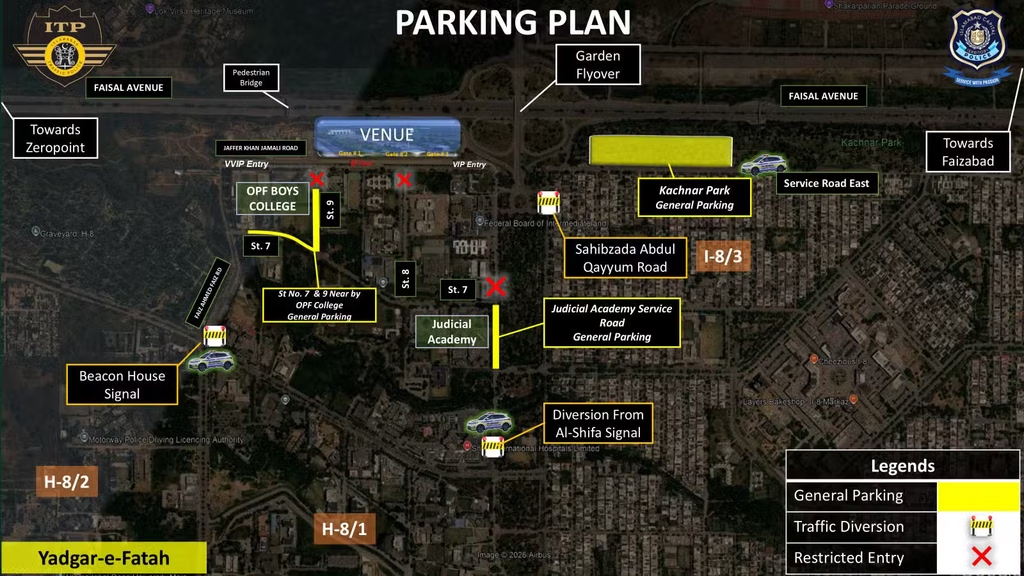
Islamabad Traffic Police (ITP) has issued a traffic plan for today’s ceremony at the Yadgar-e-Fatah monument in H-8. Two roads near the venue are closed and two diversions are in place. Drivers heading toward H-8, I-8 or the Al-Shifa Hospital area should expect delays and plan another route before leaving home.

Two Roads Are Closed Near the Monument

ITP has shut the following stretches for the duration of the event:

  • The service road from Al-Shifa Hospital toward the Federal Board
  • Faiz Ahmed Faiz Road, from Beaconhouse toward Jaffar Khan Jamali Road

ITP has not announced a specific reopening time. Drivers should assume both roads stay closed until the ceremony ends and the area clears.

Where Traffic Is Being Diverted

Vehicles coming from Sahibzada Abdul Qayyum Road are being sent toward the I-8 East Service Road. Traffic reaching Al-Shifa Signal is being turned toward Mir Chakar Road.

Expect slow movement at both diversion points. Traffic wardens will be directing vehicles manually, so signal timings near these junctions may not apply.

islamabad routes

The Three Routes ITP Recommends

ITP has advised citizens to use these roads instead:

  • Mir Chakar Road
  • Patras Bukhari Road
  • I-8 Main Double Road

Mir Chakar Road is also taking the diverted traffic from Al-Shifa Signal. That makes it the most likely of the three to back up. Drivers going toward I-8 may find the Main Double Road a faster option.

Park Only in Designated Areas

Police have asked people attending the ceremony to park in designated parking areas only. Do not leave your car on a service road or roadside near the closures. A parked car there blocks the diversion and puts you at risk of a challan.

Why H-8 Traffic Will Stay Busy After Today

The monument was inaugurated on 13 August 2026 by President Asif Ali Zardari and Prime Minister Shehbaz Sharif. It honours Pakistan’s martyrs and commemorates Marka-e-Haq.

According to Radio Pakistan, the monument opens to the public from Sunday. Visiting hours are 5:00 pm to 10:00 pm, every day except Monday. Entry is free, but visitors need a ticket from yadgarefatah.net.

The site also has a permanent 3D projection mapping system, with light shows planned for weekend nights. For drivers, this means more evening traffic around H-8 and I-8 from now on. Weekend evenings are likely to be the heaviest.

If you live or work in the area, consider leaving earlier on weekend evenings. Visitors should book tickets in advance and check parking arrangements before driving down.

Where to Get Live Updates

ITP shares live traffic updates on ITP Radio FM 92.4 and on its official social media pages. Check either before heading toward H-8 today.

New EDB Rules for Imported Used Cars

Imported car rules

On 30 September 2026, the Engineering Development Board (EDB) issued a notification that tightens the rules on commercially imported used vehicles. It took effect immediately. Vehicles in the relevant categories must now meet UNECE WP-29 safety and environmental regulations, or an equivalent standard the EDB accepts, and each one must pass inspection both before it ships and after it lands.

This is the most detailed quality control Pakistan has applied to the commercial import channel so far. It is also narrower than the headlines make it sound, and buyers should understand both points.

Background

The government opened commercial imports of used vehicles up to five years old in September 2025, subject to an additional 40% duty. The EDB adopted a first set of WP-29 standards at the same time and required pre-shipment and post-shipment inspection.

Implementation has been uneven. In April 2026 the EDB published a code of conduct for importers covering registration, tax status and after-sales obligations. In June, the Senate Standing Committee on Finance recommended withdrawing the EDB’s import notification, arguing it would hurt business activity and government revenue.

The 30 September notification shows the EDB has gone the other way and tightened the requirements rather than relaxing them.

What the Standards Cover

WP-29 is the UN framework that many car-producing countries use to harmonise vehicle regulations. The areas covered by the notification include:

  • brakes, steering and tyres
  • seat belts, airbags and child restraint systems
  • lighting
  • crash protection
  • emissions
  • safety requirements specific to electric vehicles

In practice, most recent Japanese-market cars are already built to these standards. The more important changes are about the condition of each individual car and the paperwork that goes with it.

Two Inspections for Every Car

Each commercially imported used vehicle now needs a pre-shipment inspection certificate. It must come from an internationally accredited agency registered with PSQCA under S.R.O. 2443(I)/2025. The certificate has to confirm that the car:

  • has no accident history
  • has an original odometer that has not been tampered with
  • has a sound engine
  • is within emission and noise limits
  • has no cracked glass
  • has its required airbags
  • has a verified manufacturing date
  • is roadworthy

Once the car arrives in Pakistan, a local representative of the same inspection company checks it again and confirms the original certificate is genuine and accurate. The importer pays for this second check.

That second step matters most. Paperwork from Japan has long been easier to fake than the car itself, and the post-arrival check is meant to close that gap.

Stricter Requirements for Importers

The notification also tightens who can import commercially. An eligible importer can be a company, a proprietorship or a partnership, and must hold a valid sales tax registration or NTN. Where relevant, vehicle imports must be the business’s main activity.

Importers must also pay through regular banking channels and keep full records of every vehicle they bring in. They need tie-ups with FBR-registered workshops for after-sales service. The aim is to push the trade toward documented, traceable businesses and away from informal operators.

Where the Rules Stop

The notification applies to commercial imports. It sets no new requirements for cars that are already registered and on the road in Pakistan.

This limitation is significant. Most imported cars available in Lahore right now arrived years ago, many through personal baggage, gift or transfer of residence schemes. That includes Vitz, Aqua, Prius, Mira and Move units. None of them will be re-examined under the new rules.

Old problems in the imported used car market are still around. Fake auction sheets, rolled-back odometers and resprayed accident repairs are common in the existing stock, and any car that has had a few owners locally may have been through repairs no certificate records.

Effect on Prices and Supply

Inspection and compliance add cost to every commercially imported car, and importers will pass it on. Weaker operators may leave the market, which could reduce the supply of newly imported units for a while.

For buyers, freshly imported cars should come with better documentation, at a higher price. That makes older imported cars already in the country look more attractive by comparison, which is exactly where the risk is highest.

Checks Buyers Should Still Do

For a newly imported car, ask for the pre-shipment certificate and the post-shipment verification. A legitimate importer will have both ready.

For any imported car that is already registered here, the new rules offer no protection. Check the auction sheet, compare the odometer against the recorded mileage, and have the body and engine inspected by someone who has no interest in the sale.

Verify Before You Pay

Car Mandi checks auction sheets for PKR 1,500 and confirms the export grade and mileage against the car itself. The private inspection costs PKR 4,000 and covers bodywork, engine and electrics at your location in Lahore. For an imported car registered before these rules came in, these two checks give you the protection the new notification does not.

All regulatory details are as of 1 October 2026.

Petrol at Rs387.40: What Seven Months of Fuel Inflation Means for Car Buyers

petrol price update

The Petroleum Division has set petrol at Rs387.40 per litre from 1 October 2026. That is 14 paisas lower than the previous day’s Rs387.54. High-speed diesel comes down by Rs1.89 to Rs400.35.

On its own, a 14-paisa revision has no effect on anyone’s running costs. The figure that matters is the March 2026 price of Rs321.17. Petrol has gone up by about Rs66 per litre since then, an increase of roughly 20% in seven months.

Anyone buying a car in Pakistan right now should be planning around that increase, not around the daily revisions.

How Pricing Works Under the New System

Pakistan revised fuel prices every fortnight until February 2026. After the US-Iran conflict started that month, the government moved to weekly revisions. In July the federal cabinet transferred pricing authority to OGRA and approved daily revisions.

OGRA now calculates petrol and diesel prices from a seven-working-day average of international Platts rates. New rates apply from midnight. Prices are held on Saturdays, Sundays and public holidays.

In practice, local pump prices now track global crude and the rupee within a week. That makes prices more transparent, and it also makes them more volatile. Owners should expect frequent small movements in both directions, with the overall level decided by the oil market.

The Cost of Fuel Economy Has Gone Up

Fuel efficiency has always mattered to Pakistani buyers. At current prices, the rupee difference between an efficient car and a thirsty one is large enough to affect the overall cost of ownership.

The figures below assume 1,500 km per month, which is a typical urban usage pattern.

City averageMonthly cost at Rs387.40Monthly cost at Rs321.17 (March 2026)
10 km/lPKR 58,110PKR 48,176
15 km/lPKR 38,740PKR 32,117
20 km/lPKR 29,055PKR 24,088
25 km/lPKR 23,244PKR 19,270

A car averaging 10 km/l now costs PKR 29,055 more per month to run than one averaging 20 km/l. Over a year that adds up to almost PKR 3.5 lakh. On a lot of mid-range used cars, that is more than a buyer would save by negotiating the price down.

These figures cover fuel only. Maintenance, tyres, insurance and token tax come on top.

Rated Mileage and Real Mileage Are Not the Same

Buyers usually compare fuel economy using the figures from the manufacturer or the seller. On a used car those figures often mean little. Real consumption depends on the car’s mechanical condition.

Low compression, dirty injectors, faulty oxygen sensors, worn spark plugs, sticking brake calipers and under-inflated tyres all increase fuel use. A short test drive will not reveal any of them. A car that should average 14 km/l in the city can easily return 10 or 11.

Imported hybrids need extra care. When an Aqua or Prius has a degraded hybrid battery, the petrol engine does much more of the work. Sellers will still quote the car’s original fuel average. At current fuel prices, a weak battery wipes out much of the reason for buying a hybrid.

Advice for Buyers

Look at purchase price and running cost together. Work out your actual monthly distance, then cost each car you are considering at the current OGRA rate and a realistic city average.

Have the car checked by someone other than the seller. The things that affect fuel economy are the ones that matter most: engine health, service history, and battery condition on hybrids. For imported cars, the auction sheet records the grade and odometer reading at export. If the current odometer does not match, walk away.

Advice for Sellers

Owners of cars in good condition should back that up with documents. An independent inspection report showing a healthy engine gives buyers a reason to pay your asking price, especially now that fuel costs are on every buyer’s mind.

Owners of larger-engine cars should expect running costs to come up in every negotiation. Pricing realistically at the outset will generally close the sale faster than waiting for a buyer who doesn’t care about fuel bills.

What to Watch

Now that pricing is daily, the domestic petrol price will follow international crude and the PKR/USD exchange rate with very little delay. Any developments in the Gulf will show up at the pump within days. So will any change to the petroleum levy, which requires Finance Division approval.

Anyone working out ownership costs should use the OGRA rate on the day they do the calculation, not a figure from last month.

Check the Car Before You Commit

A used car’s fuel economy depends on its condition, and condition has to be verified. Car Mandi’s private car inspection service costs PKR 4000 and covers the car’s mechanical health before you pay. For imported hybrids, auction sheet verification costs PKR 1,500 and confirms the export grade and original mileage.

All prices in this article are as of 1 October 2026.